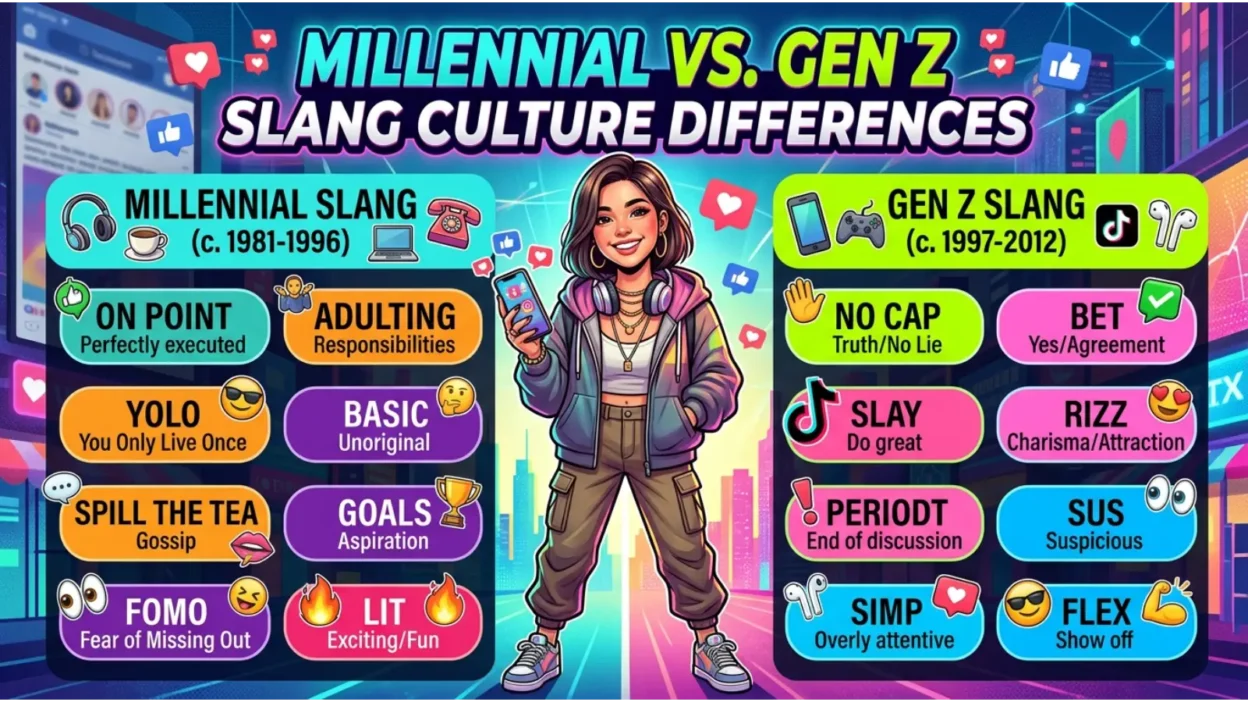
If you’ve ever heard someone say, “That’s giving main character energy,” and immediately needed a translator, you’re not alone. Language online moves so fast these days that keeping up can feel like chasing a meme train that never stops.
One minute Millennials are saying “YOLO” and “bae,” and the next Gen Z is calling everything “mid” or “delulu.” Honestly, it’s both confusing and fascinating.
The truth is, slang has always evolved. Every generation creates its own way of speaking to feel connected, creative, and just a little rebellious. But the internet—and especially social media—has turned that evolution into a full-speed roller coaster.
In this guide, you and I are diving into the world of Millennial vs. Gen Z slang, how language has changed, why certain phrases explode overnight, and what all these viral words actually say about culture today. Grab your coffee, because this is going to be fun.
The Language Evolution
Language has always reflected culture, but digital life accelerated everything.
Back in the day, slang spread through schools, movies, and music. Now? A single TikTok video can introduce a phrase to millions of people overnight. Internet culture created a global conversation where trends move faster than ever before.
Millennials grew up during the rise of texting, early social media, and internet forums. Their slang reflects that era—playful, expressive, and often rooted in pop culture references.
Gen Z, however, grew up fully online. Their language is shaped by memes, irony, short-form videos, and ultra-fast trend cycles. They communicate with layers of humor, sarcasm, and emotional shorthand that can sometimes feel like decoding a secret language.
And honestly? That’s part of the fun.
The Birth of Internet Speak
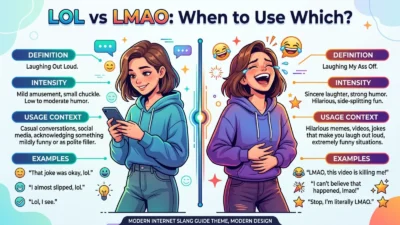
Before TikTok and viral memes, there was MSN Messenger, AOL chatrooms, and texting with limited characters.
That’s where internet shorthand really started taking off:
- LOL
- BRB
- OMG
- IDK
- TTYL
Millennials pioneered digital abbreviations because typing on flip phones was basically a thumb workout.
Over time, these shortcuts became normal speech. People stopped saying “laughing out loud” and simply said “LOL” in real conversations.
The internet didn’t just change communication—it created an entirely new dialect.
Why Millennial Slang Feels “Classic”
Millennial slang now has a nostalgic charm that feels almost vintage online.
Popular Millennial terms included:
- YOLO
- Bae
- Adulting
- On fleek
- Basic
- Squad goals
These phrases often carried optimism and exaggerated enthusiasm. Millennials loved expressive language that felt fun and relatable.
What makes Millennial slang unique is its sincerity. Many phrases were used genuinely rather than ironically.
For example:
| Millennial Slang | Meaning | Tone |
|---|---|---|
| YOLO | You only live once | Motivational |
| Bae | Romantic partner | Affectionate |
| Adulting | Doing responsible tasks | Self-deprecating |
| On fleek | Perfectly styled | Complimentary |
Today, some Gen Z users jokingly treat Millennial slang like ancient history—which is hilarious considering some of us still say “doggo” without shame.
The Fast-Paced World of Gen Z Terms
Gen Z slang changes at lightning speed.
A phrase can trend for two weeks and disappear forever. That’s because internet culture rewards novelty and constant reinvention.
Popular Gen Z expressions include:
- Delulu
- Rizz
- Mid
- Slay
- Ate
- Bet
- No cap
- NPC energy
Many Gen Z phrases rely heavily on context, tone, and irony. Sometimes the humor comes from intentionally sounding absurd.
For example:
- “She ate and left no crumbs.”
- “That fit is giving.”
- “I’m literally delulu.”
To older audiences, these phrases can sound random. But within online communities, they instantly communicate emotion, identity, and humor.
The Role of TikTok & Social Media
TikTok completely changed how slang spreads.
Instead of phrases slowly gaining popularity, trends now explode globally within hours. Viral sounds, creators, memes, and reaction videos push words into mainstream culture almost instantly.
Platforms shaping modern slang include:
- TikTok
- Instagram Reels
- Snapchat
- X (formerly Twitter)
- Twitch
- YouTube Shorts
Algorithms reward repetition. If enough creators repeat a phrase, millions of people start using it naturally.
Social media also shortened attention spans for trends. New slang appears constantly because users crave fresh ways to sound funny, relatable, or culturally aware.
Basically, the internet turned language into a real-time trend cycle.
Funny Misunderstandings: The Generation Gap
One of the funniest parts of modern slang is watching generations misunderstand each other.
A Millennial might say:
“That party was epic.”
Meanwhile, Gen Z responds:
“Okay… but was it giving?”
Confusion everywhere.
Some classic misunderstandings include:
- Millennials using Gen Z slang incorrectly
- Gen Z mocking outdated Millennial phrases
- Parents accidentally saying internet slang in serious situations
- Brands trying way too hard to sound “cool”
And honestly, nothing causes secondhand embarrassment faster than a company tweeting “No cap, our burgers slap.”
The generational gap isn’t really about language—it’s about cultural timing.
How Memes Changed Communication
Memes didn’t just influence humor. They changed the structure of communication itself.
People now communicate using:
- Reaction images
- GIFs
- Inside jokes
- Viral references
- Audio clips
- Screenshot culture
Sometimes entire conversations happen through meme references alone.
Modern slang also became more visual and emotional. Instead of saying “I’m embarrassed,” someone might say:
- “I’m screaming.”
- “Delete this immediately.”
- “Crying, throwing up.”
Memes created a style of communication that values exaggeration, relatability, and shared internet experiences.
And somehow, we all understand it perfectly.
Must-Know Gen Z Words in 2026
If you want to survive online conversations in 2026, here are some key Gen Z terms worth knowing:
| Word | Meaning |
|---|---|
| Rizz | Charisma or flirting ability |
| Delulu | Delusional in a humorous way |
| Mid | Average or disappointing |
| Slay | Doing something extremely well |
| Ate | Impressive performance |
| Bet | Okay or agreed |
| Cap | Lie or exaggeration |
| NPC | Acting robotic or unoriginal |
| Lore | Someone’s personal backstory |
| Core | Aesthetic category or vibe |
Pro tip: using these naturally matters more than using them often.
Forced slang usage is instantly noticeable online.
Professional Settings: When to Use (and Avoid) Slang
Not every situation needs internet language.
Using slang can make communication feel friendly and relatable, but context matters.
Good Times to Use Slang
- Casual conversations
- Social media captions
- Friendly group chats
- Informal marketing
- Meme-based content
Times to Avoid It
- Job interviews
- Academic papers
- Professional emails
- Client presentations
- Formal workplace communication
Imagine emailing your boss:
“The quarterly report absolutely ate.”
Probably not ideal.
The key is balance. Knowing slang helps you understand culture, but professionalism still matters in certain spaces.
The Future of Our Language
Language will keep evolving faster than ever.
Artificial intelligence, global internet culture, gaming communities, and short-form video platforms are already shaping new communication styles.
Future trends may include:
- More visual communication
- AI-generated phrases
- Faster slang cycles
- Hyper-niche online dialects
- Increased blending of global languages
What’s fascinating is that younger generations don’t just consume language anymore—they actively create it together online.
That means internet slang isn’t random chaos. It’s collaborative culture happening in real time.
Practical Tips for Staying “In the Know”
You don’t need to memorize every trending phrase to stay culturally aware.
Here are a few easy ways to keep up without feeling overwhelmed:
Follow Trend-Based Platforms
- Spend time on TikTok or Instagram Reels
- Watch how creators naturally use phrases
Learn Context First
A word’s meaning often depends on tone and situation.
Don’t Force It
Using slang unnaturally feels awkward instantly.
Ask Questions
Honestly, younger people usually enjoy explaining trends.
Accept That Trends Change
No one stays perfectly current forever—and that’s completely normal.
The goal isn’t to sound Gen Z. It’s simply to understand the evolving digital world around you.
Frequently Asked Questions
What is the biggest difference between Millennial and Gen Z slang?
Millennial slang tends to be more sincere and expressive, while Gen Z slang often uses irony, memes, and layered humor.
Why does Gen Z slang change so quickly?
Social media platforms accelerate trends through algorithms, viral videos, and constant online interaction.
Is internet slang ruining language?
Not at all. Language has always evolved. Internet slang actually shows creativity, adaptability, and cultural expression.
Why do older generations struggle with new slang?
Every generation develops unique communication styles tied to its experiences and technology.
Should professionals use Gen Z slang at work?
Only in casual or creative environments. Professional settings still require clear and appropriate communication.
Conclusion
The story of Millennial vs. Gen Z slang is really the story of how humans adapt to changing technology, culture, and connection. From early texting abbreviations to TikTok catchphrases, language has become faster, funnier, and more community-driven than ever before.
And honestly? That evolution is kind of amazing.
If you still say “YOLO” unironically or you’re trying to figure out what “delulu” means, the important thing is staying curious. Language will continue changing because people will always find new ways to express identity, humor, and belonging.
So the next time you hear a phrase that makes absolutely no sense, don’t panic.
You’re just witnessing the internet inventing culture in real time.